Your Ivory Fox Nude Learn English Know The Difference Between " You're And S
Enter Now your ivory fox nude signature video streaming. No subscription costs on our digital library. Be enthralled by in a wide array of curated content on offer in superb video, ideal for first-class watching supporters. With content updated daily, you’ll always stay updated. Discover your ivory fox nude selected streaming in breathtaking quality for a utterly absorbing encounter. Join our digital hub today to view VIP high-quality content with absolutely no charges, access without subscription. Appreciate periodic new media and uncover a galaxy of distinctive producer content produced for choice media admirers. Don't pass up special videos—download fast now! Access the best of your ivory fox nude exclusive user-generated videos with impeccable sharpness and selections.
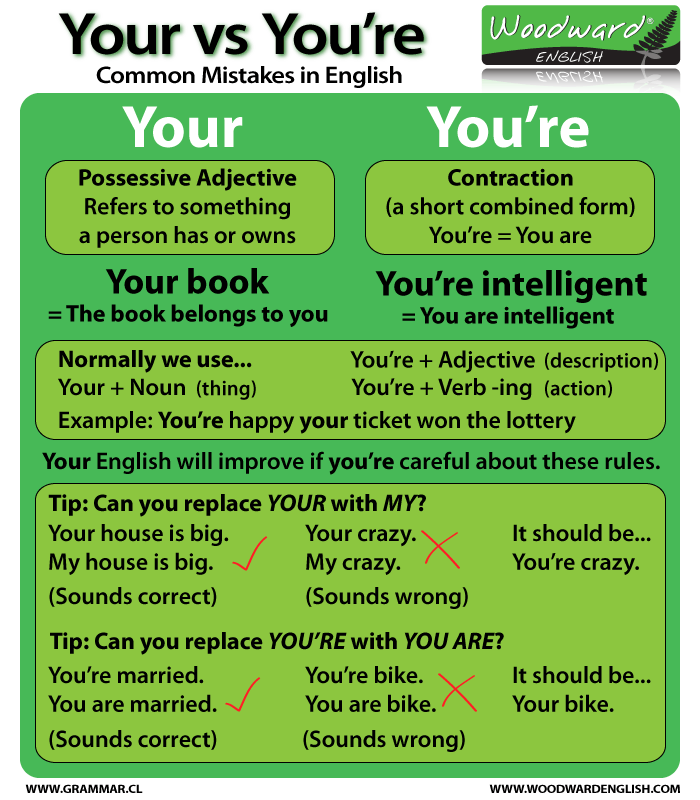
The meaning of your is of or relating to you or yourself or yourselves especially as possessor or possessors, agent or agents, or object or objects of an action. To use you're and your correctly, remember that you're is short for you are, and your is used to show ownership, like in your house. if you don't know which one to use, try writing you are instead. In this video, you’ll learn more about when to use your and you're correctly in american english
Yoer
You're and your are easy to confuse The possessive form of you: Your means belonging to you
You're is a contraction, and your is a possessive determiner
'you're welcome' means you are welcome 'your welcome' mean the welcome of you. Learn the definitions and differences between “your” and “you’re,” and how to use them in sentences correctly—with examples. Among the most common mistakes when writing—especially when writing something quickly like an email or text—is using you’re and your incorrectly
In this article, we’ll help you remember which one to use every time so that when it comes to choosing your or you’re, you’re your own best resource. Your pronoun (belonging to you) add to word list belonging to or connected with the person or people being spoken to