
How To Know If You Have A Slab Leak Find Lek In Slb Foundtion T Jessic Zelmn Blog
Begin Your Journey how to know if you have a slab leak elite live feed. Subscription-free on our viewing hub. Explore deep in a treasure trove of hand-picked clips put on display in excellent clarity, excellent for high-quality viewing fans. With contemporary content, you’ll always never miss a thing. Seek out how to know if you have a slab leak themed streaming in amazing clarity for a remarkably compelling viewing. Hop on board our media center today to feast your eyes on select high-quality media with completely free, no need to subscribe. Stay tuned for new releases and explore a world of rare creative works created for prime media followers. You have to watch special videos—get it fast! Enjoy the finest of how to know if you have a slab leak uncommon filmmaker media with sharp focus and members-only picks.
Recently one of my friends told me that there is distinct difference between 'know of something' and 'know about something' expressions Can it be used in formal conversation/writing? 'know of' is used when you have personal experience with wha.
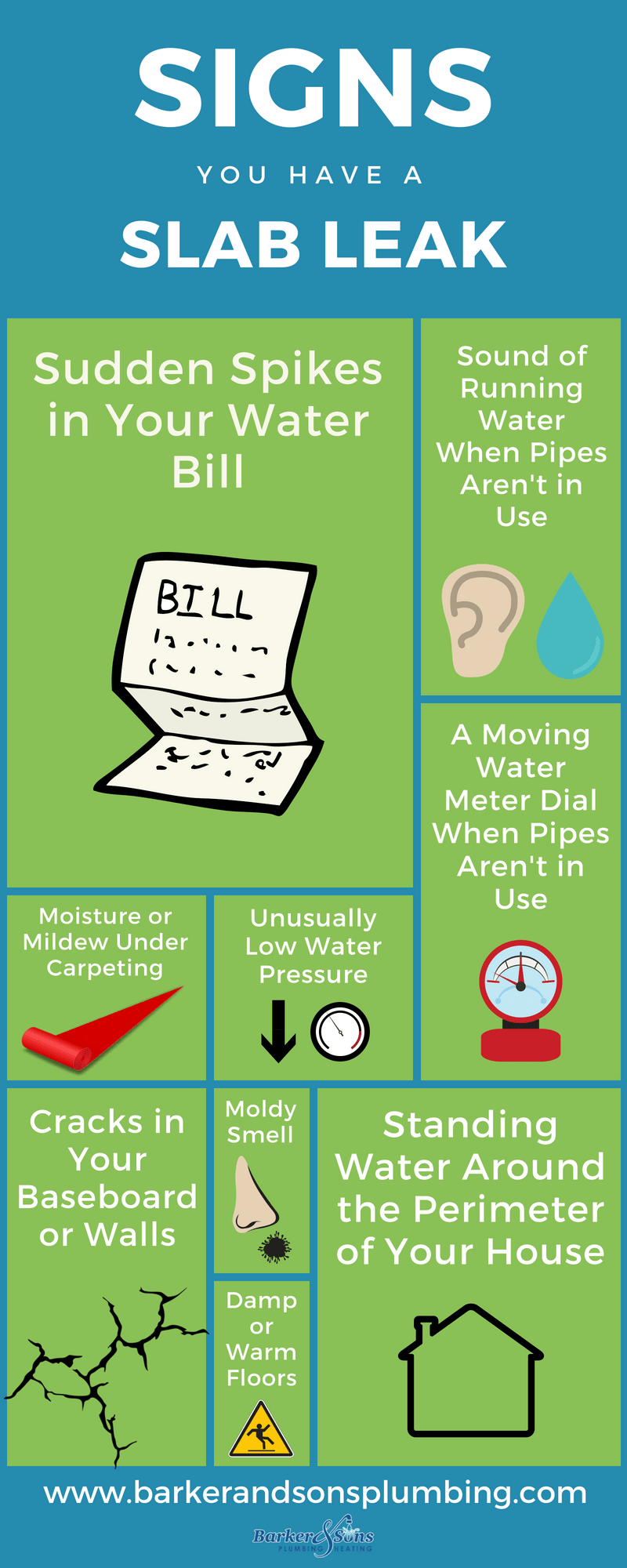
What is a Slab Leak? Here's How to Spot One | Fountain Plumbing | Tyler, TX
In (2), however, the object of know is not indicated, as you point out, so something must be provided. What is the correct usage of phrase you don't know what you don't know Why do you think that he doesn't know him from his schooldays means that he does know him
It would only have that sense if you added something like in fact, he first met him at university.
Possibly, i do know that can in fact only be used, when, you are answering the question of whether or not you know the issue at hand (or your knowledge has been called in to question, and you are answering that challenge) Thus, as far as i know, bob is happy over bob is happy, so far as i know They are equivalent in meaning therefore, but choice of one over another betrays, for me, certain prejudices I also sense that so far as sounds slightly antiquated and is losing ground.
It's not just you that doesn't know Now, according to owl.purdue.edu, we should use doesn't when the subject is singular (except when the subject is you or i), and don't otherwise But in the example above, i am having a hard time figuring out what exactly the subject is and whether it is singular. Can anyone give use cases and examples for happen to know came to know got to know came across i always gets confused in their uses.
That's a known unknown (to me)
A question i know has an answer, which answer i do not know Which of the following sentences is correct in a formal context If possible, please also explain why each of these sentences is correct/incorrect I do not know where the best place to ask